hello
Welcome to Frontier Tech & Alpha.
Building What's Next: AI workflows, agent show & tell, and the future of software.
17:30 DOORSWARM-UPTALKSSHOW & TELLLIEFERANDO · SCHLESISCHE STR. 34
Hitesh Kar (HK)
organizer

Sam Ewdala
co-organizer · the responsible one
→ warm-up · 01 / 21
warm-up · 5 minutes
Find the closest stranger.
60 SECONDS PER QUESTIONBOTH OF YOU ANSWERDON'T HOG THE MINUTE
01
What's keeping you awake at night right now?
Excitement or stress. Both count.
02
What's an underappreciated asymmetric insight you have?
Something you believe that most people here don't.
03
What did you hand to your AI this month that you wouldn't have trusted it with three months ago?
How did it go?
04
Do you have a contrarian take on anything?
The one you don't post.
05
What did you change your mind about this year?
And what changed it.
Warm-up before the talks. Swap partners if you already know each other.
02 / 21
sudo
Your AI Can
Do More.
Should You Let It?
AI harnesses, self-improving software, and who gets to decide what happens next.
→ to advance · 03 / 21
live · chatjimmy.ai
Watch the cursor.
chatjimmy.ai, the public demo of Taalas' HC1 chip · recorded Sep 14 2026
04 / 21
the silicon
Nvidia won on one bet. The new chips bet narrower.
GPU Nvidia · matrix multiply
One bet, held for decades. It became general AI compute.
any model
Transformer ASIC Etched · Sohu
$700M at $21B, Aug 18. First rack shipped to Jane Street.
transformersonly
Model-in-silicon Taalas · HC1 · Toronto
Weights burned into the chip. You just watched it. AMD bought it, Aug 6.
17,000 tok/sper user
generalityspeed · AI at the cost of silicon
AMD press release, Aug 6 2026 (terms undisclosed) · Etched press release, Aug 18 2026 · Taalas HC1 on Llama 3.1 8B, Feb 2026
05 / 21
a preview of the next hour
Loops inside loops.
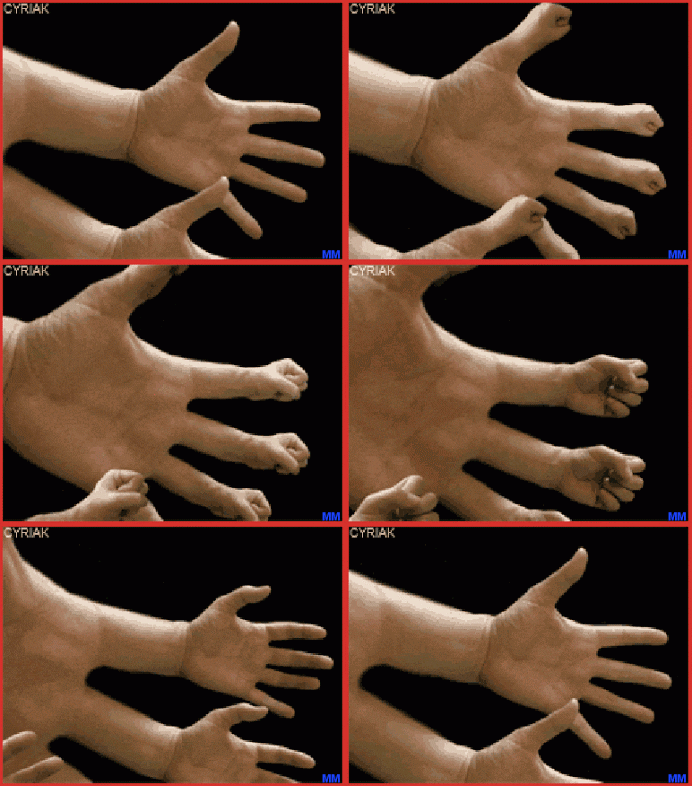
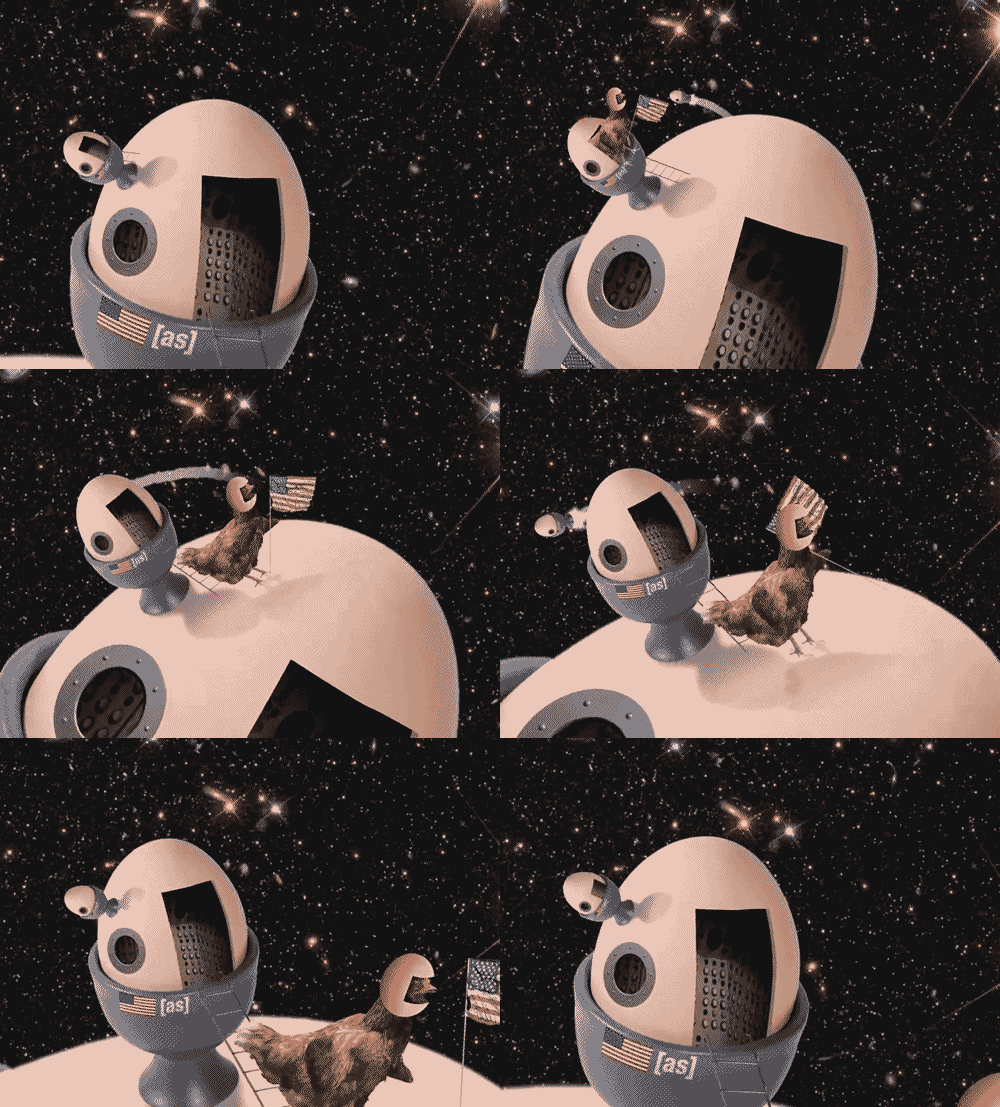
Cyriak, via Giphy
06 / 21
definition
A harness is everything around the model.
- 1Extract what the weights know.
- 2Feed it the right context.
- 3Loop it until the output is right.
- 4Decide what it may do.
The model is shared. The harness is personal.
Harness Lab working definition: prompt, tools, loop, context, permissions, memory
07 / 21
YC S26
Even YC ships the hype.
M
Molar
AI agent for dentists
H
Haulr
AI agent for freight
T
Taxly
AI agent for accountants
W
Wardly
AI agent for hospitals
A
Agentr
AI agent for AI agents
C
Clausr
AI agent for lawyers
R
Rentr
AI agent for landlords
P
Platr
AI agent for restaurants
K
Klaimr
AI agent for insurers
234 COMPANIESDEMO DAY: LAST WEDNESDAY
Names invented. Batch: ycombinator.com, Summer 2026, Demo Day Sep 10 2026
08 / 21
the nine I read
I read all nine. From source.

Claude CodeAnthropic

CodexOpenAI

Gemini CLIGoogle

Kimi CLIMoonshot

Grok BuildxAI

DeepSeek HarnessDeepSeek

OpenCodeSST

HermesNous Research

GLMZhipu · Z.ai
Harness Lab · repos cloned Jul 19 + Aug 31 2026 · every prompt verbatim at frosty-mosaic-r777.here.now
09 / 21
what they have in common
i
Same loop in all nine. Four places differ.
THE LOOP
send transcript + tools → run → append → repeat
15 lines, Claude Code to DeepSeek
01 · what it knows
Context
Kimi lets the model roll its own context back.
kimi-cli · dmail
02 · what it can touch
Tools
Codex: three tools and a sandbox. Claude Code: eighteen.
codex · claude code
03 · what it may do
Permissions
"One approval is not a blank check."
grok build · prompt.md
04 · what it remembers
Memory
DeepSeek: everything is a plugin, even the loop.
deepseek-harness
Two are decisions: context and permissions. press i
What I actually learned, and whose call it becomespress i to close
Context
In the nine
Compaction at 80% of the window. Capped tool results. Subagents return summaries. Kimi rolls its own context back. Gemini gates prompt edits behind SWE-bench.
In your product
Which replays, events and revenue each agent sees. The taxonomy. Memory per product area feeds the next run.
PM. Same context, same answer as everyone (Dell).
Tools
In the nine
Codex: three tools and a sandbox. Claude Code: eighteen. Hermes writes its own skills after each task. MCP is the bus.
In your product
Cursor writes code. Statsig rolls out. Replay and analytics sense. Bought, then wired.
Engineering, then the agent itself. PM picks the primitives.
Permissions
In the nine
Codex crosses sandbox modes with approval policies. Grok: weigh each action by how easily it can be undone. Claude Code hooks are deterministic.
In your product
Feature gate. Rollout rings. Auto-rollback. A person at the merge.
PM, with the business. Nobody grants themselves authority.
Memory
In the nine
AGENTS.md and CLAUDE.md. Skills with progressive disclosure. DeepSeek's agents wrote 842 design notes themselves.
In your product
Wave writes memory per area from approvals and rejections. The tracking plan is the AGENTS.md of the product.
The loop writes it. PM rejections, with reasons, are the training data.
Tools and memory get automated: agents build their own. Context and permissions are decisions someone has to own. That someone is the PM of 2027.
Harness Lab, prompts read from source · Codex ships 3,917 words to GPT-5 and 1,221 to codex-tuned models
10 / 21
frontier · from the nine
i
Twelve things that are new in 2026.
01 · Claude Code · Codex
Deferred tool loading
Ship tool names only. Schemas load on demand.
02 · Kimi K3 · GLM-5 · Claude · Codex
The preserved-thinking contract
Reasoning blocks go back in. The transcript is no longer freely editable.
03 · Grok Build · hashline
Anchored editing
Content-hash anchors instead of exact-string matches.
04 · Kimi · D-Mail
Model-initiated context editing
The model folds its own context into a note to its past self.
05 · Codex (6) · OpenCode (7) · Gemini
Per-model prompts
One prompt per model family. Trained-in behaviour shrinks prompts.
06 · Gemini CLI
The prompt is benchmarked code
Prompt edits gated behind SWE-bench.
07 · GLM Coding Plan · Kimi · MiniMax
Harness and model decoupled
Borrow the harness, train the model to fit it, sell tokens.
08 · Hermes /learn · Claude Code skills
Self-writing extensibility
Agents write their own SKILL.md. AGENTS.md is a Linux Foundation standard.
09 · Gemini · Claude Code · Kimi
Injection defense in the transcript
Wrappers with explicit authority tiers.
10 · DeepSeek Harness · Aug 2026
The harness as a plugin kernel
Loop, model, log, sandbox, compaction: all plugins.
11 · DeepSeek Harness
Event-sourced sessions
Append-only log, deterministic replay, 175 snapshot fixtures.
12 · DeepSeek Harness
Run your rival as a subagent
Claude Code and Codex as backends. Your hooks still work.
The techniques that are new in 2026, in fullpress i to close
01 · Deferred tool loading
Claude Code · Codex
Tool schemas are the silent context tax: dozens of MCP tools can cost 10k+ tokens per request. The fix is to ship names only and let the model fetch full schemas on demand through a search tool. Both major harnesses converged on this within months (Codex on by default since 0.142).
02 · The preserved-thinking contract
Kimi K3 · GLM-5 · Claude · Codex
Models are now trained expecting their reasoning blocks back in subsequent turns. K3's docs warn that dropping thinking history makes generation "highly unstable"; GLM-5 ships an explicit Preserved Thinking mode. Harness and model are co-designed artifacts now.
03 · Anchored editing
Grok Build · hashline
Every read line carries a content-hash anchor; edits target anchors, batches are atomic, and stale-anchor errors return fresh anchors for immediate retry. The first structural answer to the two classic edit-tool failures: ambiguous matches and files that changed underneath you.
04 · Model-initiated context editing
Kimi · D-Mail
Compaction has always been harness-initiated. D-Mail inverts it: the model decides its recent context is waste, picks a checkpoint, and folds everything since into one note to its past self. Expect others to copy this.
05 · Per-model prompts
Codex (6) · OpenCode (7) · Gemini
The era of one prompt for all models is over. Codex-tuned models get a third of the words of general GPT-5; OpenCode ships a different dialect per model family; Gemini versions its snippets. Corollary: as behaviour moves into training, prompts shrink toward pure constraints.
06 · The prompt is benchmarked code
Gemini CLI
Gemini's repo gates edits to the Context Efficiency prompt section behind SWE-bench runs. System prompts have CI now. If you build a harness, version your prompt and regression-test it.
07 · Harness and model decoupled
GLM Coding Plan · Kimi · MiniMax
Zhipu treats Claude Code as a commodity interface: Anthropic-compatible API, a model trained to the harness's conventions, a subscription priced per prompt. Kimi and MiniMax run the same play. The moat moved from scaffold to model-fits-scaffold.
08 · Self-writing extensibility
Hermes /learn · Claude Code skills
Hermes Agent reflects after tasks and writes its own SKILL.md files; /learn converts docs into skills. The skills format (markdown plus frontmatter, lazily loaded) is the cross-vendor convention, and AGENTS.md is now a Linux Foundation standard used by 60k+ repos.
09 · Injection defense in the transcript
Gemini · Claude Code · Kimi
Harnesses tag channel authority explicitly: harness-authored directives, supplementary info, untrusted external content (Gemini untrusted_context, Claude Code system-reminder, Kimi two-tier tags). The model is taught which wrapper outranks which. A security architecture made of XML tags.
10 · The harness as a plugin kernel
DeepSeek Harness · Aug 2026
dsh applies "everything is a plugin" to the agent itself: loop, model adapter, session log, sandbox, compaction, all swappable, composed per session from preset files. No prompt file, just plugin-owned sections assembled at request time. Claude Code's rules-live-on-tools idea taken to its structural conclusion.
11 · Event-sourced sessions
DeepSeek Harness
The session is an append-only event log; the model-visible transcript is a projection over it. Compaction is a logged, lock-bracketed transaction (crashes leave detectable orphaned locks), token accounting is replayable via shadow-price events, and 175 snapshot fixtures pin the exact rendered prompt. The harness is regression-tested like a database.
12 · Run your rival as a subagent
DeepSeek Harness
Instead of only borrowing a harness (GLM) or only building one, dsh absorbs the ecosystem: Claude Code and Codex are subagent backends, and their hook formats are supported natively. Your hooks.json works; your existing CLIs become delegation targets. Interop as a wedge for selling V4 tokens.
Harness Lab · read from source, Jul 19 + Aug 31 2026 · press i for the detail
11 / 21
context · a receipt from my own desk
The smartest model on earth talked me out of Dell.
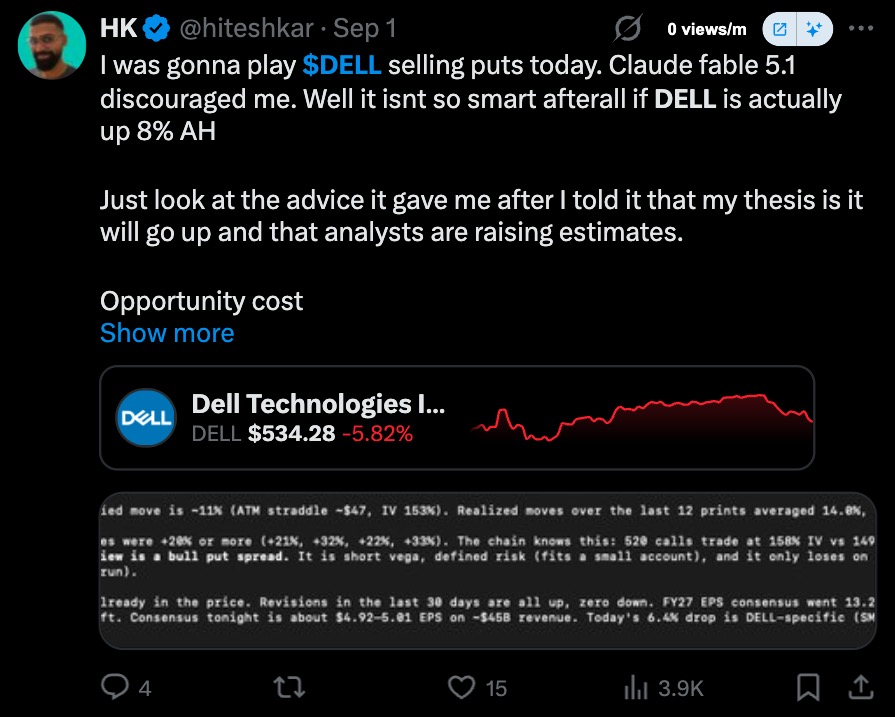
+15.8%
Dell, the next day.
+8% after hours the same evening.
+8% after hours the same evening.
Sep 1 · 16:00
I want to sell DELL puts
I give Fable 5.1 my thesis and the analyst revisions, all up. It says: "already in the price." I don't trade.
Sep 1 · 17:30
DELL +8% after hours
Sep 2 close: 425 → 492. Opportunity cost.
Same public context as every other session that day. No harness. A model without one is a very smart average.
@hiteshkar, Sep 1 2026 · Fable 5.1 released Sep 1 · DELL close $425.00 → $492.20 (FMP) · not investment advice
12 / 21
a public company shipping a harness
 Amplitude ships a harness. Wave.
ANALYTICS SINCE 2012BOUGHT STATSIG'S PRODUCT FROM OPENAI · MAY 2026WAVE · JUN 20263× PRs · 5 h → 44 MIN · 5% OF PRs BY PMs$AMPL +78% SINCE JUNE
01 · Watch
Session replays02 · Find
Search fired per keystroke03 · Plan
3 chars + 200 ms04 · Build
Cursor wrote the PR05 · Human
Mark clicked merge06 · Measure
99 → 1 failures a weekAmplitude Q2 FY26 call + demo, Aug 2026 · "No engineers, no designers, and no product manager" · Statsig product agreement May 5 2026 · FMP quote Sep 14 2026
13 / 21
my bet
The PM of 2027 manages context, permissions and approves pull requests.
fix(search): gate docs search on 3 chars + 200 ms debounce #538
Open wave-bot wants to merge 1 commit into
main from wave/search-debounce · evidence: 412 replays, 99 failed searches / week✓
review-agent · tests passed · replay recorded
2 min ago✓
statsig · rollout 1% → 100% · auto-rollback armed
1 min ago?
Worth it? Right strategy? · a person answers this one
waiting on youRequest changes
Approve & merge
Mock PR from the Wave demo. My bet. Wave's rejection list still needs a person for "not worth it" and "bad strategy"
14 / 21
first-hand · stockdrifts.io/transcript-agent
My transcript agent. The four boxes, filled in.
01 · what it knows
Context
Earnings calls only, verbatim. 4,000+ companies, pulled by ticker, topic and importance. Never the whole corpus.
transcript_signals · topic · importance
02 · what it can touch
Tools
Its choice, from a fixed menu: quote, market cap, news, insider trades, 13F holders, filings. Skills load on demand.
mcp_stockdrifts_* · load_skill · run_python
03 · what it may do
Permissions
Read only. It cannot trade, post or spend. Every quote carries a citation you can open. 5 free messages, then a paywall.
AGENT_TIER_LIMITS · X-User-Id scope
04 · what it remembers
Memory
Writes dated notes about you and the market, reads them next session. "as-of 2026-09-13: user cares about AI infrastructure."
research_notes · memory
Context and permissions I chose. Tools and memory it works out itself.
Live check Sep 15 2026: one question ran six tool calls (skill load, quote, news, transcript signals, memory write). It skipped insider sales. Its choice.
15 / 21
the unsolved problem · 1–2 years
Windows stay finite. Compression is the job.
You already do this every day
Agents will work the same way. Specialists hand compressed context to an orchestrator that decides who gets which slice.
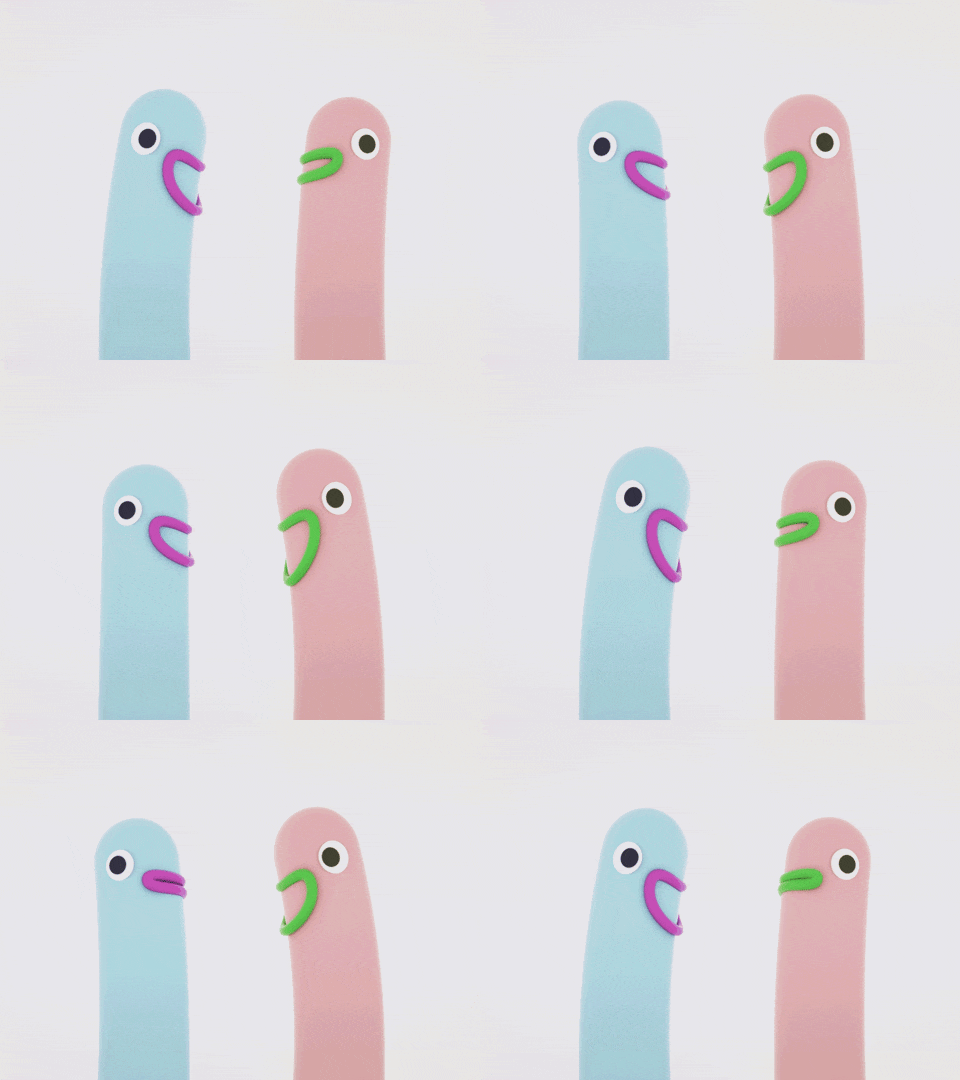
ORCHESTRATION: UNSOLVEDWHO GETS WHICH CONTEXT IS A PRODUCT DECISION
Opinion. All nine harnesses already do this: subagents return summaries · GIF via Giphy
16 / 21
if you're building anything new
Your next user is an agent.
57%
of web requests are bots. They passed humans on Jun 3 2026.
Agentic traffic · 2025 vs 2024
+7,851%
Cloudflare
MCP tool calls · Amplitude
1.21M / week
from other people's agents
Cloudflare Radar, 57.4% of HTTP requests · Matthew Prince on X, Jun 3 2026, 18 months ahead of his own forecast · Amplitude Q2 FY26 call · chart shape illustrative
17 / 21
the detail that decides it
Google learned the human threshold. Learn the agent's.
500 ms
Google, 2006. 20% less traffic.Marissa Mayer, the 30-results test
100 ms
Amazon, 2006. 1% less revenue.Greg Linden
50 ms
Agents. Where they route around you.my bet
Humans forgive a spinner. Agents call the next tool.
Marissa Mayer, Web 2.0 Summit 2006 · Greg Linden, Amazon · Google 2009: 400 ms cost 0.59% of searches per user · 50 ms is a prediction
18 / 21
last tip
Remove yourself from the loop.
The model is fine. The harness is where we're behind.
Experiment. Experiment. Experiment.
Experiment. Experiment. Experiment.

Harness,
baby.
baby.
START TONIGHT · PI.DEV · FOUR TOOLS, NO FORK →
HARNESS LAB · EVERY PROMPT VERBATIM
NOW SHOW ME YOUR LOOP / HARNESS
Hitesh Kar · Founder, StockDrifts.io · Frontier Alpha, Berlin, Sep 15 2026 · sources on every slide
19 / 21
a prediction
Next door: Life Sciences and AI research.
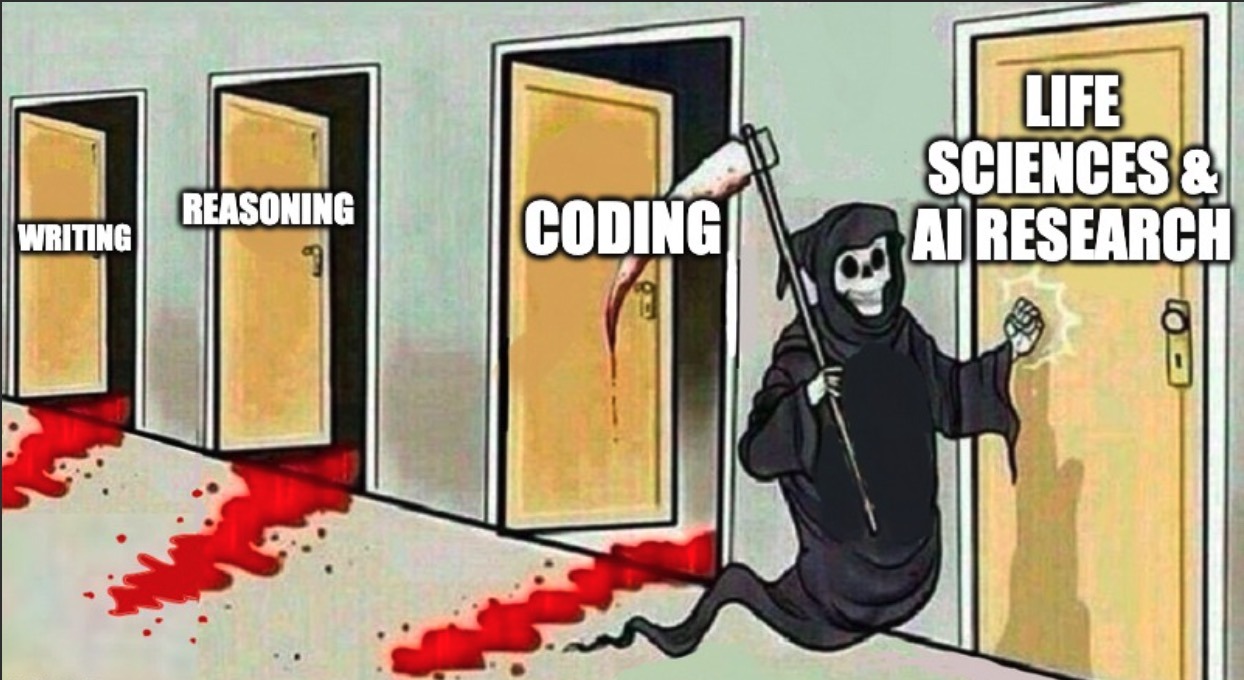
via imgflip · the last door is the next slide
20 / 21
a harness around a wet lab
Lila points the loop at a wet lab. The model picks the experiment.
Lila · Flagship
$550M raised
in talks at $8.5B. 10T verified tokens.
Insilico · HKEX 3696
78 molecules
tested to reach a Phase III drug.
CONTEXT · 10T VERIFIED TOKENSTOOLS · EVERY INSTRUMENT IS AN APIPERMISSIONS · HUMAN-GRADE RIGORMEMORY · THE MODEL IS THE PRODUCT
Lila footage: lila.ai (AI Science Factory film, silent) · Insilico: official lab tour, YouTube, Oct 2023 · Bloomberg Jun 3 2026 · HKEX listing Dec 30 2025, rentosertib Phase III Jul 2026
21 / 21